The Atlanta Dream and Washington Mystics meet in a first-round matchup featuring one of the WNBA’s best offenses against one of its toughest defenses. Atlanta finished the regular season 30-14 and earned the No. 4 seed, while Washington went 28-16 and grabbed the No. 5 seed. The Dream averaged 91.3 points per game, third in the league, while the Mystics allowed just 82.7 points per game, second-best. With both teams bringing different styles to the matchup, this series could come down to which team can dictate the pace.
Angel Reese Must Control the Paint
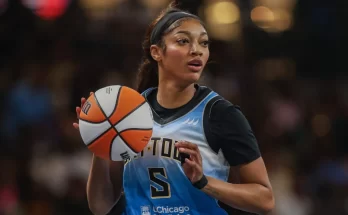
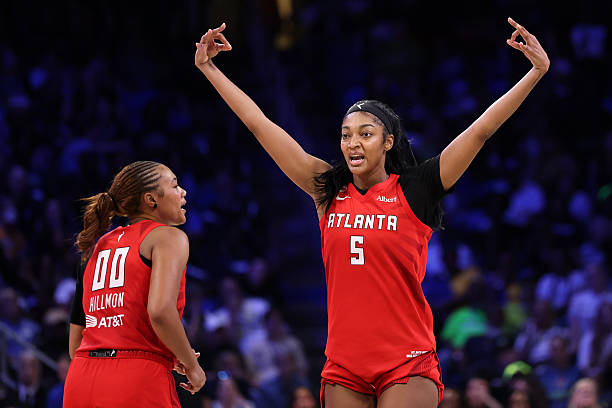
Angel Reese is one of Atlanta’s biggest advantages heading into the playoffs, averaging 16.4 points and a league-leading 12.1 rebounds per game. She also averaged 4.8 offensive rebounds, giving the Dream plenty of opportunities to create second-chance points. Washington counters with Kiki Iriafen and Shakira Austin, who averaged 9.6 and 9.5 rebounds, respectively. If Reese dominates the glass, Atlanta can put constant pressure on Washington’s defense and limit the Mystics’ transition opportunities.
Rhyne Howard Has to Make an Impact
Rhyne Howard gives Atlanta another major weapon on both ends of the floor, averaging 17.7 points, 3.8 rebounds, 3.7 assists, and 2.3 steals per game. She also knocked down 3.1 three-pointers per game, forcing Washington to defend her well beyond the paint. Howard, Reese and Allisha Gray combined for 53.1 points per game during the regular season. Atlanta needs that trio to produce at a high level because Washington has enough defensive talent to make the Dream work for every basket.
Washington’s Defense Is the Biggest Challenge
The Mystics finished second in the WNBA in scoring defense, allowing only 82.7 points per game. That will be a major test for an Atlanta offense that averaged 91.3 points, creating one of the series’ most important statistical battles. Washington wants to slow the game down, force Atlanta into difficult half-court possessions, and make the Dream rely on contested shots. If Atlanta can consistently get into transition and generate open three-point looks, it becomes much harder for Washington to control the game defensively.
Kiki Iriafen Could Be a Problem
Iriafen emerged as one of Washington’s most important offensive weapons, averaging 15.3 points and 9.5 rebounds per game while shooting 51.4% from the field. Sonia Citron also averaged 16.7 points, 4.4 rebounds, and 2.5 assists, giving Washington another reliable scoring option. The Mystics cannot afford to become overly dependent on their defense because Atlanta has enough offensive firepower to punish them. Iriafen and Citron producing efficiently could force Atlanta to defend more than just Washington’s perimeter attack.
Late-Game Execution Could Decide It
Washington was particularly effective in close regular-season games, with 18 of its 28 victories coming within five points in the final five minutes. That statistic matters in a best-of-three playoff series where one or two possessions can decide the outcome. Atlanta has Jordin Canada, who averaged 7.3 assists per game, to help organize the offense when possessions matter most. If these games are tight entering the fourth quarter, both teams will need to execute without giving away possessions.
The Bottom Line
This series comes down to a fascinating contrast between Atlanta’s offensive production and Washington’s defensive strength. The Dream have three elite scoring options in Reese, Howard, and Gray, while the Mystics have the defensive numbers and late-game experience to make the matchup difficult. Atlanta also has to use its home-court advantage and avoid letting Washington dictate the tempo. Rebounding, three-point shooting, turnovers, and fourth-quarter execution could ultimately determine which team advances.
Follow me on X @lsportstakes and read other outstanding articles on Beyond Women’s Sports.